Your roof does more than keep rain out. It regulates temperature, protects your home from wind and fire, and accounts for up to 40% of your home’s curb appeal. Choosing the right roofing material Bay Area homes need means balancing cost, durability, and performance in a unique climate that brings fog, heat, seismic activity, and seasonal wildfires.
This guide walks you through the most common roofing materials used in Richmond, Berkeley, Oakland, and surrounding communities, explains what works best in Bay Area conditions, and helps you make an informed decision that will protect your investment for decades.
Why Bay Area Climate Demands Specific Roofing Choices
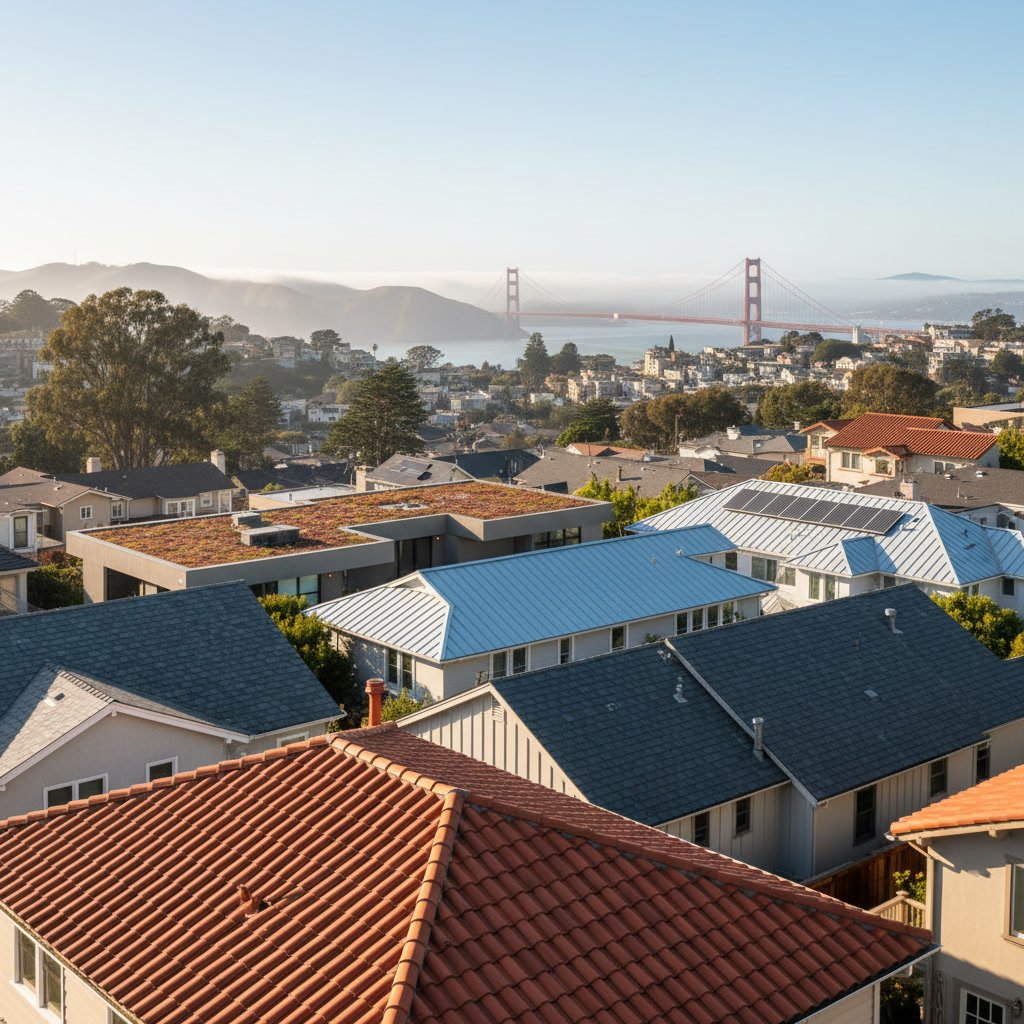
The Bay Area sits in a microclimate zone unlike anywhere else in California. Coastal fog keeps temperatures moderate year-round, but you also face intense sun exposure during summer months, occasional heavy winter rains, and the constant threat of wildfires in nearby hills.
Your roofing material needs to handle thermal expansion and contraction without cracking, resist algae growth from moisture, meet Class A fire ratings in many jurisdictions, and withstand seismic movement without losing integrity.
Materials that perform well in Southern California or the Central Valley may fail prematurely here. Understanding these regional demands helps you avoid costly mistakes and premature replacement.
Asphalt Composition Shingles
Asphalt shingles cover about 80% of residential roofs in the United States, and they remain the most budget-friendly option for Bay Area homeowners. Quality three-tab shingles cost between $3.50 and $5.50 per square foot installed, while architectural (dimensional) shingles run $4.50 to $7.50 per square foot.
Modern asphalt shingles last 20 to 30 years in Bay Area conditions when properly installed with adequate ventilation. They meet Class A fire ratings, come in dozens of colors, and most contractors know how to install them correctly.
The downside is durability. While they handle fog and moderate temperatures well, extreme heat can accelerate granule loss. They also lack the visual appeal of tile or metal, which matters in historic neighborhoods throughout Berkeley and Oakland.
Best For
Homeowners on a tight budget, properties with simple roof lines, and situations where you need reliable performance without premium aesthetics. Asphalt shingles work well for rentals, starter homes, and properties where you plan to sell within 10 to 15 years.
Clay and Concrete Tile Roofing
Clay and concrete tiles define the Bay Area aesthetic. Drive through older neighborhoods in Richmond, Albany, or El Cerrito and you’ll see these durable materials on homes built from the 1920s through today.
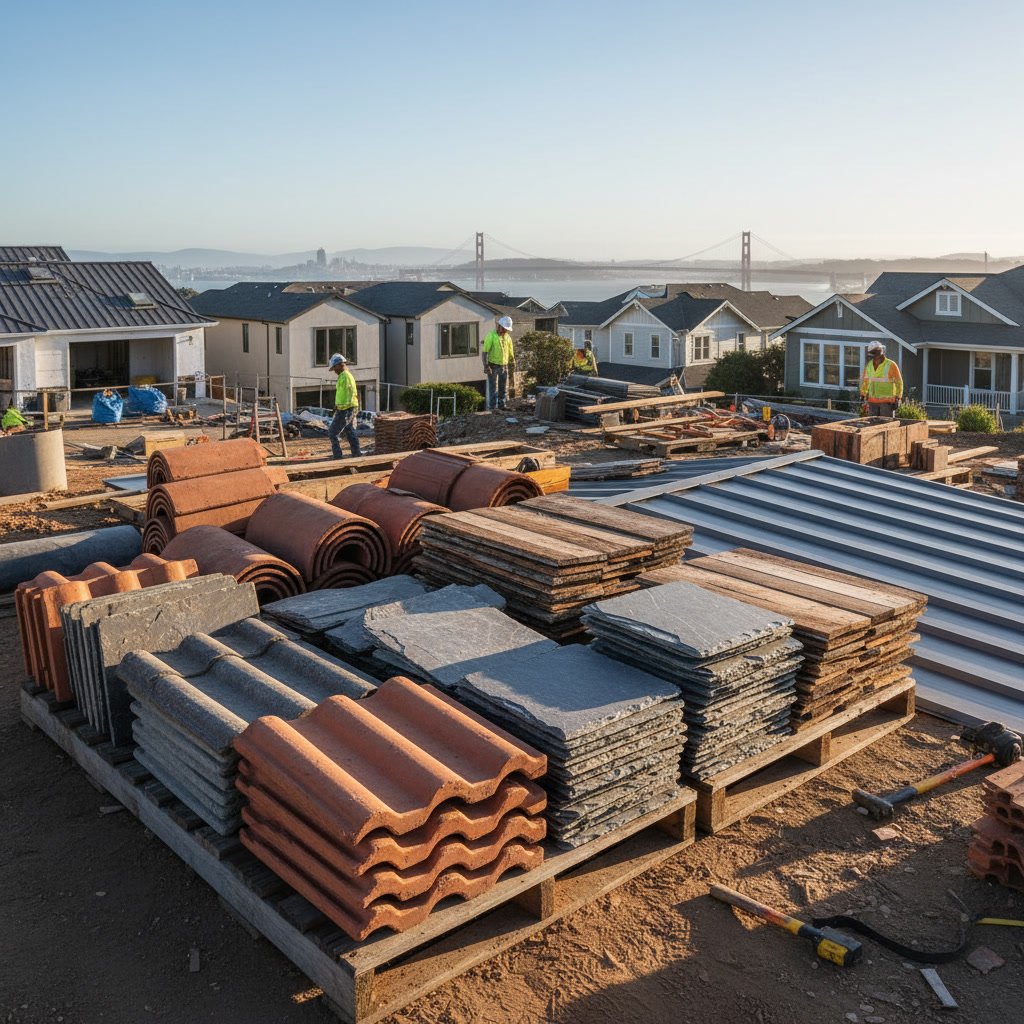
Clay tiles cost $10 to $18 per square foot installed, while concrete tiles run slightly less at $8 to $15 per square foot. Both materials last 50 to 100 years with minimal maintenance, resist fire exceptionally well, and provide excellent thermal mass that reduces cooling costs.
The primary concern is weight. Tile roofs weigh 850 to 1,100 pounds per square (100 square feet), requiring structural support that many older homes lack. You may need to reinforce rafters before installation, adding $2,000 to $6,000 to your project cost.
Seismic activity can crack individual tiles, but quality installation with proper fastening systems minimizes this risk. When installed correctly, tile roofing survives earthquakes better than most alternatives.
Pro Tip: If you’re planning a kitchen remodeling project that adds a second story or significant weight, coordinate with your roofer to ensure your structure can handle both upgrades simultaneously.
Best For
Historic homes, Spanish and Mediterranean architecture, properties where long-term value outweighs upfront cost, and homeowners who want a roof that will outlast their ownership.
Metal Roofing Systems
Metal roofing has surged in popularity across the Bay Area over the past decade. Standing seam metal roofs cost $9 to $14 per square foot installed, while metal shingles or tiles run $7 to $12 per square foot.
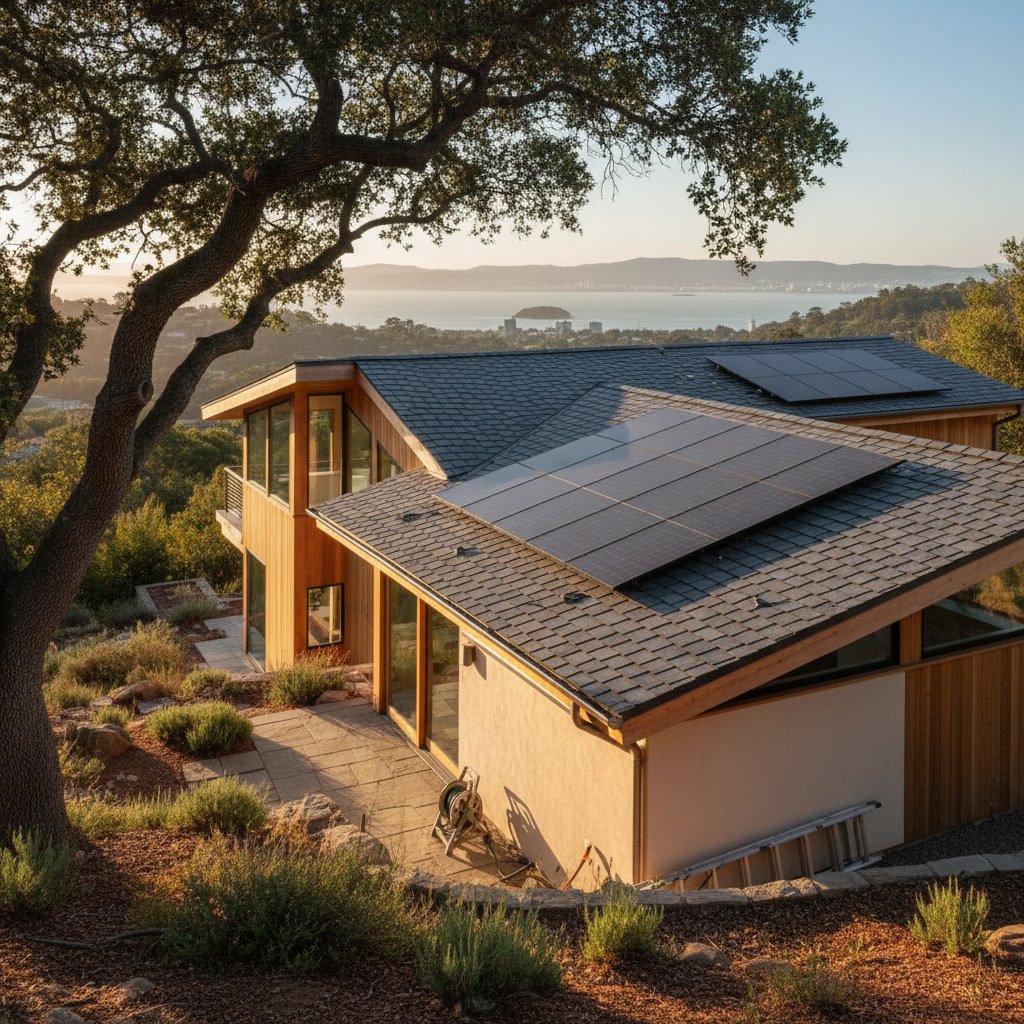
Metal roofs last 40 to 70 years, reflect solar heat (reducing cooling costs by 10% to 25%), weigh only 50 to 150 pounds per square, and require almost no maintenance. They meet Class A fire ratings, handle seismic movement exceptionally well, and work with solar panel installations better than any other material.
The Bay Area’s coastal fog doesn’t cause rust on modern metal roofing systems. Galvalume steel (aluminum-zinc alloy coating) resists corrosion for decades, and painted finishes carry warranties of 30 to 50 years.
Noise during rain concerns some homeowners, but proper insulation and attic space eliminate this issue in most residential applications. The bigger challenge is finding experienced installers. Poor installation leads to leaks, panel movement, and premature failure.
Best For
Modern and contemporary architecture, homes with solar panels, properties in wildfire-prone areas, and environmentally conscious homeowners who want recyclable materials. Metal roofing also makes sense when your structure cannot support the weight of tile.
Wood Shake and Shingle Options
Cedar shake roofs create a rustic, natural aesthetic that complements craftsman and ranch-style homes throughout Kensington and Martinez. Quality cedar shakes cost $8 to $14 per square foot installed and last 25 to 35 years with proper maintenance.
However, fire regulations severely limit wood roofing in many Bay Area jurisdictions. Most areas now require Class A fire ratings, which traditional cedar cannot meet. Fire-treated shakes exist but cost significantly more and require treatment renewal every 10 to 15 years.
Wood roofing also demands more maintenance than alternatives. You’ll need to clean moss and algae growth regularly in foggy microclimates, treat for insects, and replace damaged shakes periodically.
Best For
Historic preservation projects where building codes allow exemptions, properties in areas without strict fire regulations, and homeowners willing to invest in ongoing maintenance for aesthetic reasons.
Synthetic and Composite Roofing Materials
Composite roofing products mimic the appearance of slate, tile, or shake while offering better performance and lighter weight. These engineered materials cost $7 to $13 per square foot installed and last 30 to 50 years.
Modern composites meet Class A fire ratings, resist impact from falling branches, and handle freeze-thaw cycles (relevant in higher elevation areas). They weigh 60% to 75% less than natural materials they replicate, eliminating structural concerns.
The challenge is quality variance. Premium brands like DaVinci and Boral produce excellent products, but budget composites fade quickly and become brittle under UV exposure. Stick with manufacturers offering 50-year warranties and proven Bay Area installations.
Best For
Homeowners who want the appearance of premium materials without the weight or cost, properties where historical accuracy matters less than aesthetics, and situations where you need specific fire ratings or impact resistance.
Matching Roofing Material to Your Budget
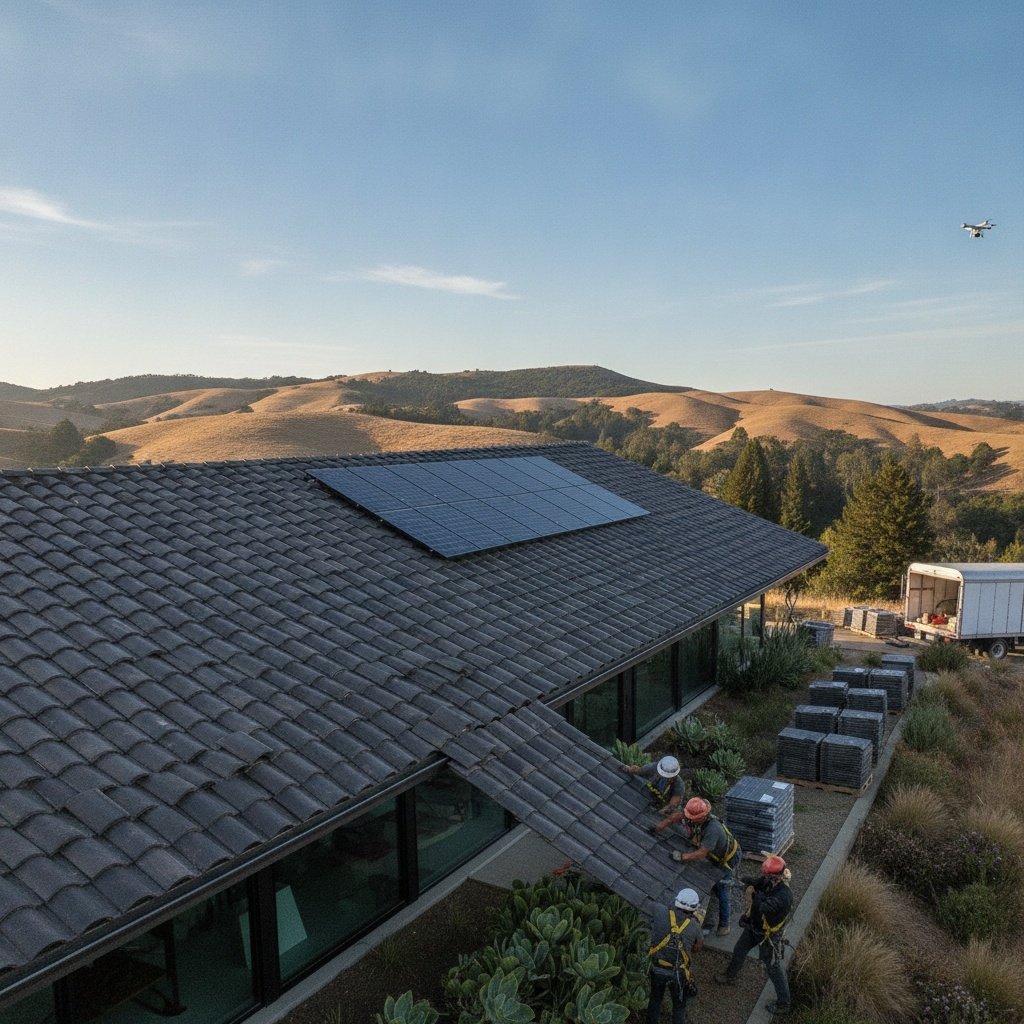
Your total roofing cost depends on material choice, roof complexity, removal and disposal of existing materials, and necessary repairs to decking or structure. A typical 2,000 square foot Bay Area home needs 22 to 28 squares of roofing (accounting for pitch and waste).
Budget $8,000 to $14,000 for asphalt shingles, $16,000 to $32,000 for metal roofing, $20,000 to $40,000 for tile, and $15,000 to $28,000 for quality composites. These ranges include removal of one existing layer, new underlayment, proper ventilation, and code-compliant installation.
Financing makes premium materials accessible. Many contractors offer payment plans, and the long-term value of durable roofing material Bay Area conditions demand often justifies the higher initial investment.
Consider lifecycle costs beyond installation. A $25,000 metal roof that lasts 60 years with zero maintenance costs less per year than a $12,000 asphalt roof replaced every 22 years with ongoing repairs.
Key Takeaway: Calculate cost per year of service, not just upfront price. Include maintenance, insurance savings, and energy efficiency when comparing materials.
Understanding Fire Ratings and Building Codes
Most Bay Area jurisdictions require Class A fire-rated roofing for new construction and replacement projects. This rating means your roof can withstand severe fire exposure without igniting or allowing fire penetration.
Class A materials include most asphalt shingles, all metal roofing, clay and concrete tile, and treated composites. Wood shakes without treatment typically rate Class C (moderate fire resistance) or unrated, making them illegal for most installations.
Your building department will require permits for roof replacement. Expect inspections of decking, underlayment, flashing, and final installation. Working with licensed contractors familiar with local requirements prevents delays and ensures code compliance.
Some areas also mandate cool roof standards that require minimum solar reflectance values. Light-colored metal and tile naturally meet these standards, while dark asphalt shingles may require special reflective granules.
Working with Professional Roofing Contractors
The quality of installation matters more than material choice in determining roof lifespan. Poor installation of premium materials fails faster than expert installation of budget options.
Look for contractors with specific experience in your chosen material. A roofer who excels at asphalt shingles may lack the specialized skills for standing seam metal or tile installation. Ask for references from recent projects using the same material in nearby cities.
Verify licensing (California requires a C-39 Roofing Contractor license), insurance coverage, and manufacturer certifications. Premium roofing manufacturers only certify contractors who complete training and demonstrate quality workmanship.
Get detailed written estimates that specify materials by brand and model, installation methods, warranty coverage, timeline, and payment schedule. Never pay more than 10% upfront, and hold final payment until inspection approval and cleanup completion.
Frequently Asked Questions
What is the most affordable roofing material Bay Area contractors recommend?
Asphalt composition shingles offer the lowest upfront cost at $3.50 to $7.50 per square foot installed. However, when you calculate cost per year of service including maintenance and energy savings, metal roofing often provides better long-term value despite higher initial investment.
How long does roofing material last in Bay Area climate conditions?
Asphalt shingles last 20 to 30 years, metal roofing 40 to 70 years, concrete tile 50 to 75 years, and clay tile 75 to 100 years or more. Actual lifespan depends on installation quality, ventilation, maintenance, and exposure to extreme weather events.
Can I install solar panels on any type of roofing material?
Yes, but metal roofing provides the easiest installation with specialized clamps that don’t penetrate the roof surface. Asphalt shingles and tile require proper flashing and sealing around mounting hardware. If you plan solar installation within five years, coordinate with your roofer to ensure proper preparation.
Do I need to upgrade my roof structure for heavy materials like tile?
Tile roofs weigh 850 to 1,100 pounds per square, compared to 200 to 350 pounds for asphalt shingles. Homes built before 1960 often need rafter reinforcement before tile installation. A structural engineer can assess your home for $400 to $800, preventing costly problems during installation.
Will a new roof lower my homeowners insurance premium?
Most insurance companies offer discounts of 15% to 35% for Class A fire-rated roofs, impact-resistant materials, or roofs less than 10 years old. Metal and tile roofing typically qualify for the highest discounts. Contact your insurance agent before choosing materials to maximize savings.
Making Your Final Decision
Choosing the right roofing material Bay Area homes need comes down to balancing budget, aesthetics, durability, and local climate demands. Asphalt shingles work for immediate affordability, metal roofing delivers exceptional longevity and fire resistance, tile provides timeless beauty and thermal performance, and composites offer compromise solutions.
Consider your home’s architectural style, neighborhood character, structural capacity, and how long you plan to own the property. A roof installed correctly with quality materials should outlast your mortgage and potentially serve the next homeowner as well.
Murillo Construction Painting and Remodeling brings over 30 years of experience installing quality roofing systems throughout Richmond, Albany, Emeryville, and surrounding Bay Area communities. We work with all major roofing materials and help homeowners make informed decisions based on their specific needs and budget. Call +15106609596 to schedule a free consultation and detailed estimate for your roofing project.