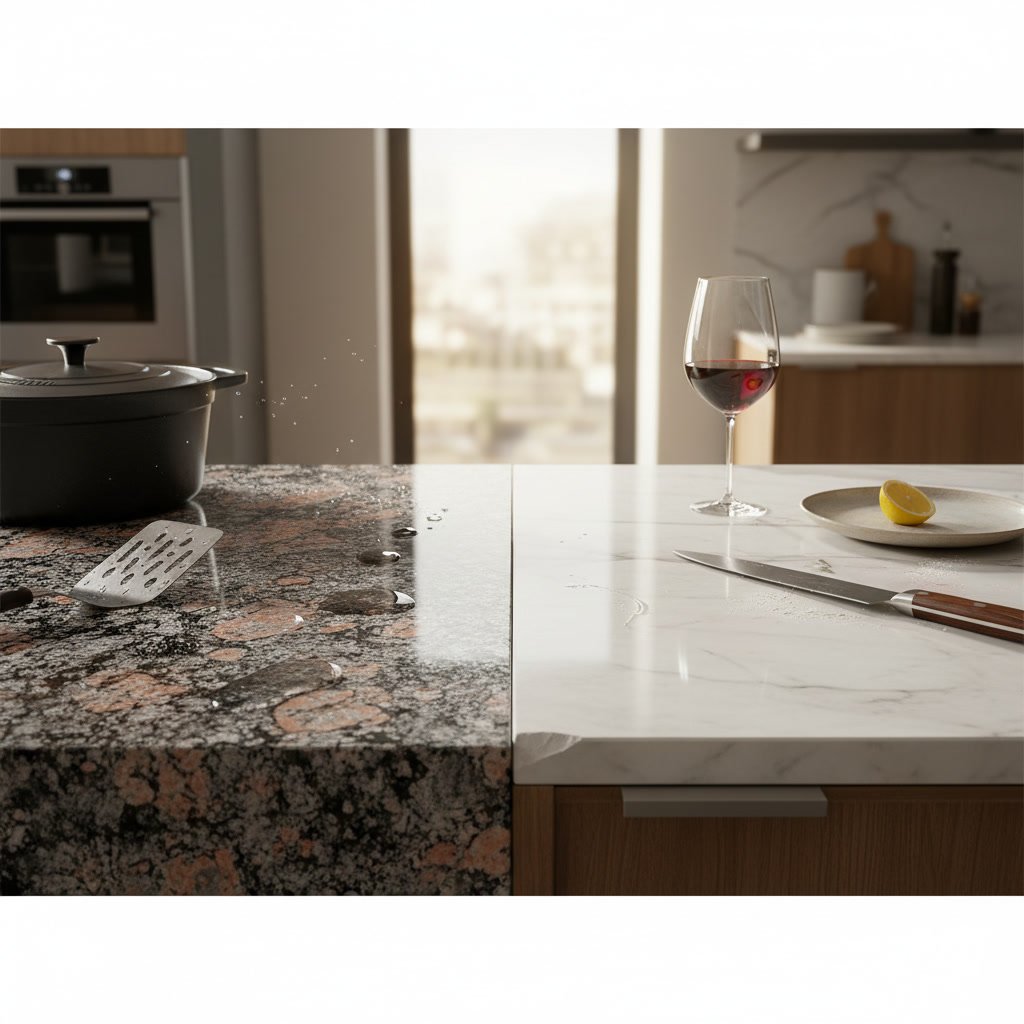
Granite typically offers superior durability for kitchen countertops compared to marble, resisting scratches, heat, and acids far better under daily cooking conditions. While both materials bring natural beauty to a kitchen, granite’s harder composition and lower porosity make it the more practical choice for high-traffic cooking spaces. Understanding the granite vs marble debate helps homeowners select the right material for their lifestyle and budget.
The decision between these two natural stones affects not only your kitchen’s appearance but also how much maintenance you’ll perform over the years. Each material has distinct physical properties that determine how it holds up to cutting, spilling, heating, and cleaning.
Why Kitchen Countertop Durability Matters
Your countertops endure constant contact with knives, hot pans, acidic foods, and cleaning products. A material that cannot withstand these daily stresses will show wear quickly, requiring frequent sealing, polishing, or even replacement. Durable countertops save money over time and maintain their appearance with minimal intervention.
Kitchens see more activity than almost any other room in the home. When you prepare meals daily, host gatherings, or work from home with a laptop on the counter, the surface must resist impacts, stains, and temperature changes without degrading. The right choice reduces repair costs and preserves your investment for decades.
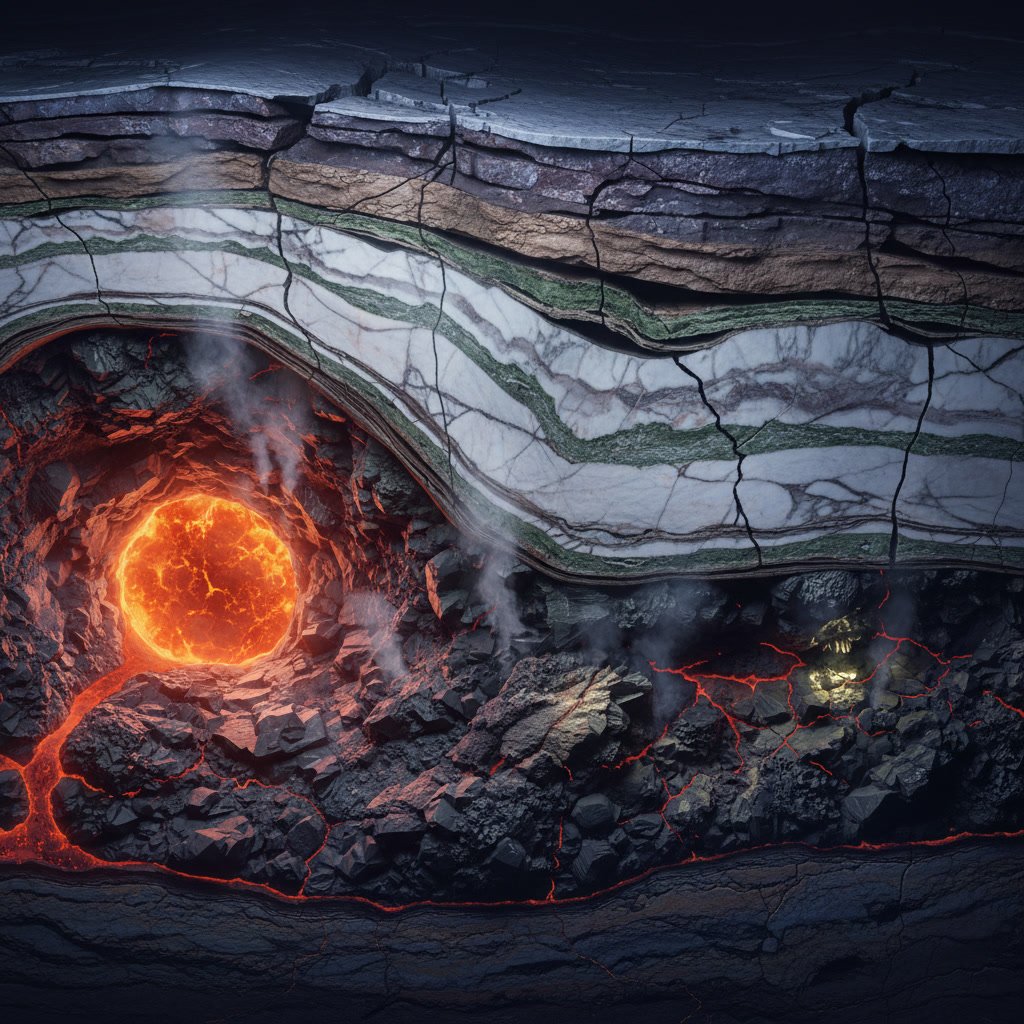
How Granite and Marble Form Beneath the Earth
Granite forms deep underground when molten magma cools slowly over millions of years, creating an extremely hard igneous rock. This slow crystallization produces interlocking mineral grains, primarily quartz, feldspar, and mica, which give granite exceptional hardness and resistance to scratching.
Marble begins as limestone or dolomite that undergoes intense heat and pressure, transforming into a metamorphic rock. This process, called metamorphism, recrystallizes the calcium carbonate into softer, interlocking calcite crystals. The result is a beautiful stone with veining patterns, but one that remains chemically reactive and physically softer than granite.
Hardness and Scratch Resistance Compared
Granite ranks between 6 and 7 on the Mohs hardness scale, making it harder than most kitchen knives. You can cut directly on granite without scratching the surface, though doing so will dull your knives quickly. This hardness also means granite resists abrasion from heavy pots, appliances, and daily wear.
Marble measures between 3 and 5 on the same scale, placing it in a much softer category. Kitchen knives can scratch marble countertops, and even routine sliding of plates or cookware can leave visible marks over time. While these scratches can sometimes be polished out, preventing them requires cutting boards and careful handling.
Heat Tolerance in Daily Kitchen Use
Both granite and marble tolerate high temperatures well, having formed under extreme heat deep within the earth. You can place a hot pan directly on either surface without causing immediate damage in most cases. However, thermal shock from rapid temperature changes can crack either stone, especially if the slab has existing microfractures or was improperly installed.
Granite generally handles thermal stress better due to its denser, more uniform structure. Marble’s layered crystalline structure can develop hairline cracks more easily when exposed to repeated heating and cooling cycles. For homeowners who frequently cook with high heat, granite offers a slight edge in long-term resilience.
Chemical Resistance and Staining Behavior
Granite’s composition makes it highly resistant to acids and bases found in common foods. Lemon juice, vinegar, wine, and tomato sauce will not etch or damage a properly sealed granite surface. Staining remains possible if liquids penetrate the stone, but sealing granite once or twice per year typically prevents absorption.
Marble reacts chemically with acids because it consists primarily of calcium carbonate. Any acidic substance will etch the surface, leaving dull spots that cannot be removed by cleaning. Coffee, wine, and citrus juices cause permanent marks unless wiped immediately. This sensitivity requires constant vigilance and makes marble less forgiving in an active kitchen.
Porosity and Sealing Requirements
Granite has lower porosity than marble, meaning it absorbs fewer liquids when properly sealed. Most granite slabs require sealing every one to two years, depending on the specific variety and usage patterns. Darker granites often need less frequent sealing than lighter shades.
Marble’s higher porosity demands more frequent sealing, often every three to six months in a busy kitchen. Even with diligent sealing, marble can still absorb oils and pigmented liquids that create permanent stains. The calcium carbonate structure makes marble inherently more absorbent, regardless of sealant quality.
Maintenance Routines for Long-Term Performance
Granite requires minimal daily care beyond wiping with mild soap and water. Avoid harsh cleaners that can degrade the sealant, and reapply sealer when water no longer beads on the surface. Most homeowners find granite low-maintenance enough for daily cooking without special precautions.
Marble demands more careful handling and specialized products. Use only pH-neutral cleaners designed for natural stone, never acidic or abrasive formulas. Immediately wipe spills, use coasters and trivets consistently, and expect to reseal more frequently. Professional polishing may be needed every few years to restore the finish and remove minor etching.
Cost Considerations for Granite and Marble in Berkeley Kitchens
Granite countertops typically range from $50 to $150 per square foot installed, depending on the rarity of the stone, thickness, and edge details. Common varieties remain affordable, while exotic patterns command premium prices. The wide selection allows most budgets to find an attractive option.
Marble generally costs more, ranging from $75 to $250 per square foot installed. The higher price reflects both the stone’s desirability and the additional care required during fabrication and installation. Homeowners in Berkeley often weigh this premium against marble’s maintenance demands when planning a kitchen remodeling project.
Lifespan and Replacement Frequency
Properly installed and maintained granite countertops can last a lifetime without needing replacement. The material’s durability ensures it retains both function and appearance for 30, 50, or even 100 years. Many homeowners never replace granite countertops, even through multiple kitchen updates.
Marble countertops can also last decades, but they often require more intervention to maintain their original appearance. Etching, staining, and surface wear accumulate over time, and while professional restoration can help, some homeowners choose to replace marble sooner than granite due to aesthetic concerns rather than structural failure.
Which Material Fits Your Cooking Style
Consider how you actually use your kitchen when choosing between these materials. If you cook frequently, bake often, or have young children who might spill acidic drinks, granite’s forgiving nature makes daily life easier. The material handles real-world kitchen chaos without constant worry.
Marble suits homeowners who cook less intensively, prefer baking to high-heat cooking, and enjoy the ritual of careful maintenance. Some choose marble for low-use areas like bathroom remodeling projects or islands used primarily for display, reserving granite for primary prep areas. Combining both materials in a single kitchen allows you to enjoy marble’s beauty where it won’t face heavy use.
Making the Right Choice for Your Home
Granite delivers superior durability for kitchen countertops, resisting the scratches, stains, heat, and acids that define daily cooking. Marble offers unmatched elegance but requires ongoing care and accepts visible wear as part of its character. Your decision should reflect both your aesthetic preferences and your realistic commitment to maintenance.
When planning your countertop installation, work with experienced professionals who understand local building practices and material behavior. Murillo Construction Painting and Remodeling has installed both marble and granite countertops throughout the Bay Area for over 30 years, helping homeowners select the right material for their specific needs. Proper fabrication and sealing during installation dramatically affect long-term performance, regardless of which stone you choose.
Choosing the right countertop material affects your kitchen’s function and beauty for decades. Murillo Construction Painting and Remodeling brings three decades of experience to every residential construction and remodeling project, ensuring your countertops are fabricated and installed to exacting standards. Contact us at +15106609596 to discuss which material best suits your cooking habits, design vision, and budget.